Showing posts with label fitness. Show all posts

Saturday, January 1, 2022

Why I’m a Strength Coach

I think the New Year is a good time to remind myself, and inform my readers, of why I do what I do. I did the same for my Physical Therapy blog.
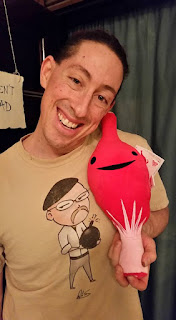


I am a strength coach. I have a B.S. in Exercise Science with a focus on training athletes for performance. I have earned the highest level of certification that exists in this field: a Certified Strength & Conditioning Specialist (CSCS). I specialize in training Historical Fencing/HEMA athletes and other combat sports and martial disciplines. I also work with general fitness clients. I am self-employed and if you are interested in hiring me then check here

Exercise is Important

Physical activity and exercise are important for human health. Helping others be more physically active reduces their likelihood of developing conditions such as cardiovascular disease and diabetes, amongst others. 


Helping folks be more active is also one of my motivations for Athena School of Arms. Especially for the nerdier folks we tend to attract, conventional sports and exercise were never appealing, so I’m happy for the opportunity to give others an exercise avenue that suits them.

Exercise is Fun

Or rather, I think, it ought to be. So I want to help folks find exercise that works for them, appeals to them and motivates them. This is part of why I do my AMAs on Facebook and generally engage folks in conversation on this topic. 

Strength Training in Particular

Strength training in particular I find to be more fun than other exercises. It’s not boring and repetitive the way that long-duration cardio is. It’s changes of activity every few minutes and a number of different things across a days’ workout. 


The technical lifts are especially interesting. Explosive actions like the clean, jerk and snatch, and variations, as well as the plyometric exercises. The other big lifts like squat, deadlift and bench press also have their technical components that are interesting. 


And it has clear, easily observable improvement that comes fairly steadily if you put in the work. 

Training for Performance is an Interesting Puzzle

I do enjoy training athletes for performance and sport-specific training. It’s more of a puzzle to solve. More pieces to understand. More variables to coordinate. It’s overall more mentally engaging for me. And I really appreciate that. 

People Improve

Lastly, I like watching my clients get stronger, more fit and more confident about the gym. I want people to feel able to do this and to continue on their own with a lifetime habit of training. 


If you’d like to help support me then you can contribute thru Ko-FI. Thanks.


Friday, February 6, 2015

Geeking Out - Part 3: Estimating Calories Burned

This is the third part (part 1, part 2) of my series on geeking out about your exercise. Geeking out about your exercise isn't necessary. But it can help you become and remain motivated and it can help you achieve your goals.

METs

The simplest way of estimating calories burned in exercise is what's known as METs which stands for metabolic equivalents. At rest a person is at 1 MET. Exercise will be some multiple of this amount.

1 MET is approximately 1 calorie per hour per kilogram of bodyweight. I weigh about 85 kilos right  now, so I burn about 85 calories per hour doing nothing.

Martial arts training, like HEMA, is going to be 5-8 METs. Most of the training is going to be around 6 METs, and using that as a baseline value is a reasonable estimate. While high-intensity training or sparring can get up to 10 METs, this is typically alternated with rest periods so over the course of an hour it will average out to something lower - like 6 METs.

At 6 METs, 1 hour of HEMA would be 85x6 = 510 calories. This is consistent with my own values from my heart rate monitor.

The Compendium(pdf) is a resource that estimates METs for a very wide range of activities. This can then be used to help you estimate calories for all of your exercise and fitness endeavors.

Conclusion

Lot's of different methods exist for estimating calorie expenditure in exercise - apps and online calculators and so on. But for something unusual like HEMA there aren't such resources. As such a heart rate monitor or METs estimate are your best tools.

Friday, January 30, 2015

Geeking Out - Part 2: General Fitness

My last post was about heart rate and calories burned in HEMA training - as determined by a heart rate monitor. In that post I talked about how this informs training for athletic development and performance improvement. Now I'm going to talk about what these numbers say about general fitness, because I know that many folks use HEMA as a part of their approach to general health.

Moderate versus Vigorous Exercise

The basic guidelines for cardiovascular exercise for general health recommend either 60 minutes of vigorous exercise or 150 minutes of moderate exercise per week. Or some combination of the two - basically every minute of vigorous is equivalent to 2.5 minutes of moderate exercise.

Over the course of a 1-2 hour class my typical heart rate was in the moderate exercise range. The only part of my practices that boosted my pulse into the vigorous range is the intense warm-up that is a part of training at Athena School of Arms. However, most groups warm-up is only going to equate to a few minutes of vigorous exercise.

Good motor learning, just like learning anything else, happens best when you are alert and refreshed. Exhausting exercise will impair motor learning. As such, a large amount of vigorous exercise is not appropriate for for a technical training session.

In other words, HEMA training should be moderate exercise, and we shouldn't be pushing ourselves to make a significant part of it vigorous.

Physical Activity Goals

150 minutes per week of HEMA training is a perfectly reasonable objective. I suspect that everyone who isn't already doing that much would like to be able to.

If you are endeavoring to reach a complete program of physical activity for general health and wellness, then your HEMA training, a few times a week, is sufficient for cardiovascular health and fitness. While HEMA training is simultaneously neuromotor exercise - good for balance and agility.

As such you can dedicate remaining available time to strength training and flexibility.

The ACSM guidelines go on to say that greater cardiovascular health benefits are seen at double these amounts. This becomes more time consuming but can be met more easily with the inclusion of vigorous, dedicated cardio work in addition to HEMA training.

Calories Burned

HEMA training burns calories, of course. However, HEMA does not burn calories at an intense rate, as is to be expected from moderate exercise. I will go into details on estimating calories burned in my next post in the series.

Conclusion

HEMA training is a good way to meet both the cardiovascular and neuromotor training goals of a complete approach to physical activity for health. And, well, that's convenient and fun.

Tuesday, February 18, 2014

HEMA Specific Fitness

Again, I'm writing a different post than the one I was planning, but hopefully this makes the posts more engaging. I've recently come across several examples of something I want to address. I've seen it on Facebook and other places. And it's a fairly common trope in martial arts circles.

The idea that Martial Arts Fitness is all about bodyweight exercises and large numbers of reps.

I'm not picking on Guy Windsor, since I've seen this idea in plenty of places, he just happens to have this laid out very clearly on his school's wiki. (And it's pretty awesome that his school has it's own wiki).

He has a fitness test laid out here. He describes it as, "the minimum level of physical fitness and strength appropriate for training swordsmanship." So it's clearly intended to be HEMA specific fitness. But is it specific? It' has 20 push-ups, 60 squats and a bunch of other bodyweight or lightweight exercises. And it's supposed to take at least 6 minutes.

And I've seen plenty of similar assertions for what is fitness for HEMA from other people.

To clearly develop an idea of specific fitness then we need to understand the needs of HEMA. So let's take a look at what the needs of a fight are. And the follow-up question will be what the needs of HEMA training are, since training and fighting are not going to be the same.

Fighting Fitness
  • Short bursts of high intensity with longer periods of low intensity. 
  • The low intensity is moving around adjusting distance, waiting for a good tempo etc. This is in the neighborhood of a walking pace - though that varies with a person's fighting style.
  • The high intensity is very high, frequently attempting max acceleration, speed and/or power.
  • The high intensity periods are normally only a few seconds - 1 to 3 seconds.
  • High intensity bursts incorporate only a few high intensity actions: a pass or lunge (occasionally two), with a few attacks and some other footwork done at a high speed.
  • Total fight time is short. Data from real fights suggest that most are less than a minute. And tournament matches top out at 3-4 minutes depending on the event.
Does this look like the 6 minute test described by Guy Windsor? Is it like doing 100 pushups or 200 squats in a row as advocated by some others?

Before we talk about the fitness needs of training we need to get something out up front. Training needs to avoid being so fatigued that it impairs form and technique. 100 lunges in a row may be a good number of lunges, but if many of them were crap due to fatigue then how useful was that practice time?

And besides do you ever do 100 lunges in a row during a fight? No, of course not, so is that level of fitness useful?

The reality is that well before I hit lunge number 100 my muscles have fatigued to the point that I'm not practicing at an explosive intensity - it's just not possible to practice at an explosive intensity for 100 reps. Do I want to train 85 non-explosive lunges? What you're thinking is that your are practicing form at that point. But we cannot separate form from muscular action. As I fatigue I use different muscles. As I slow down my muscles fire differently. When I'm fresh and ready to fight will I express the 15 explosive lunges or the 85 slower lunges? Will I even have the choice because of which I trained more?

Training Fitness
  • The same as above except with larger volume and less rest.
  • Also, periods of medium-high intensity continuously for many repetitions.
In short, training related fitness is about power-endurance and speed-endurance.

I don't want to get into detail about assessment right now, but I do want to make it clear that reasonable benchmarks for fitness appropriate for training needs to be based on what a fight is like, and not extended endurance actions.